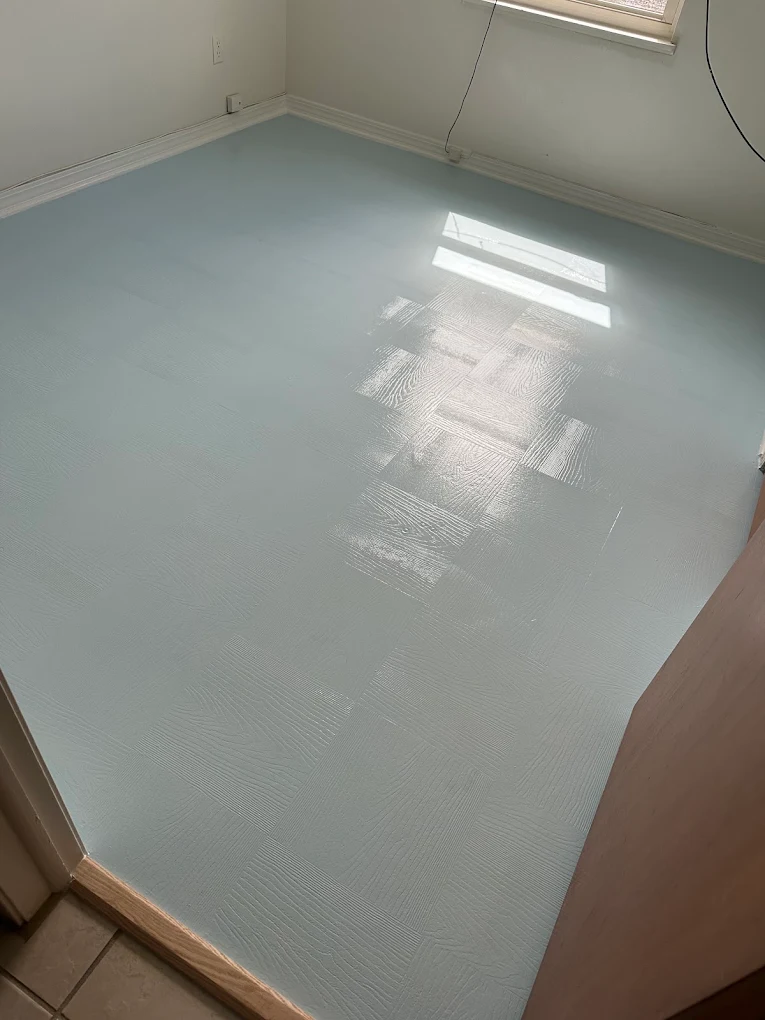
Failure-pattern review
Map peeling, wear, impact damage, discoloration and any repeated symptoms.
Epoxy floor repair · Jacksonville
Peeling, worn paths, bubbles and damaged patches do not all call for the same fix. JW inspects the existing finish and accessible concrete before recommending a localized repair, broader recoat or more complete removal.
Scope the work before choosing shortcuts
If the surrounding finish is firmly bonded, an isolated repair may be practical. If failure is widespread or continues beyond the visible edge, covering one spot can leave the larger problem in place. JW checks the pattern, prior products when known and current use of the floor before defining a repair boundary.
What the estimate should address
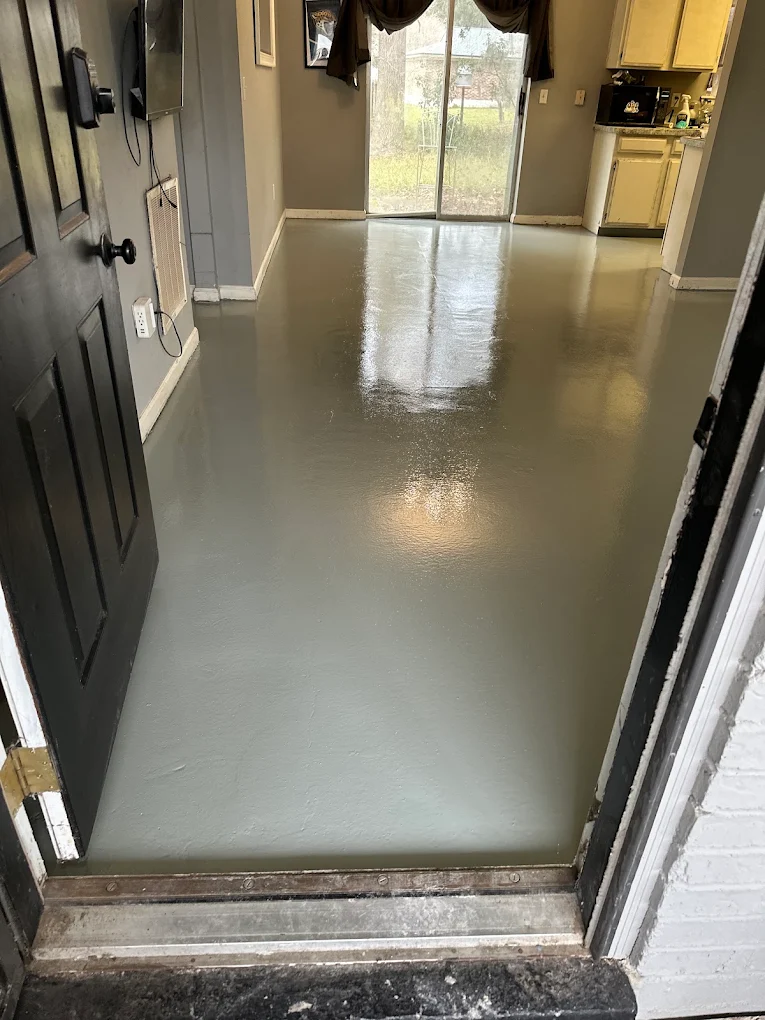
Specific materials and preparation depend on the property, existing surface and manufacturer requirements.
Map peeling, wear, impact damage, discoloration and any repeated symptoms.
Identify known products, layers and repair history when information is available.
Discuss spot repair, section recoat or removal based on condition and desired finish.
Set a realistic expectation for color, texture and sheen around the repair.
Choose for the way the space is used
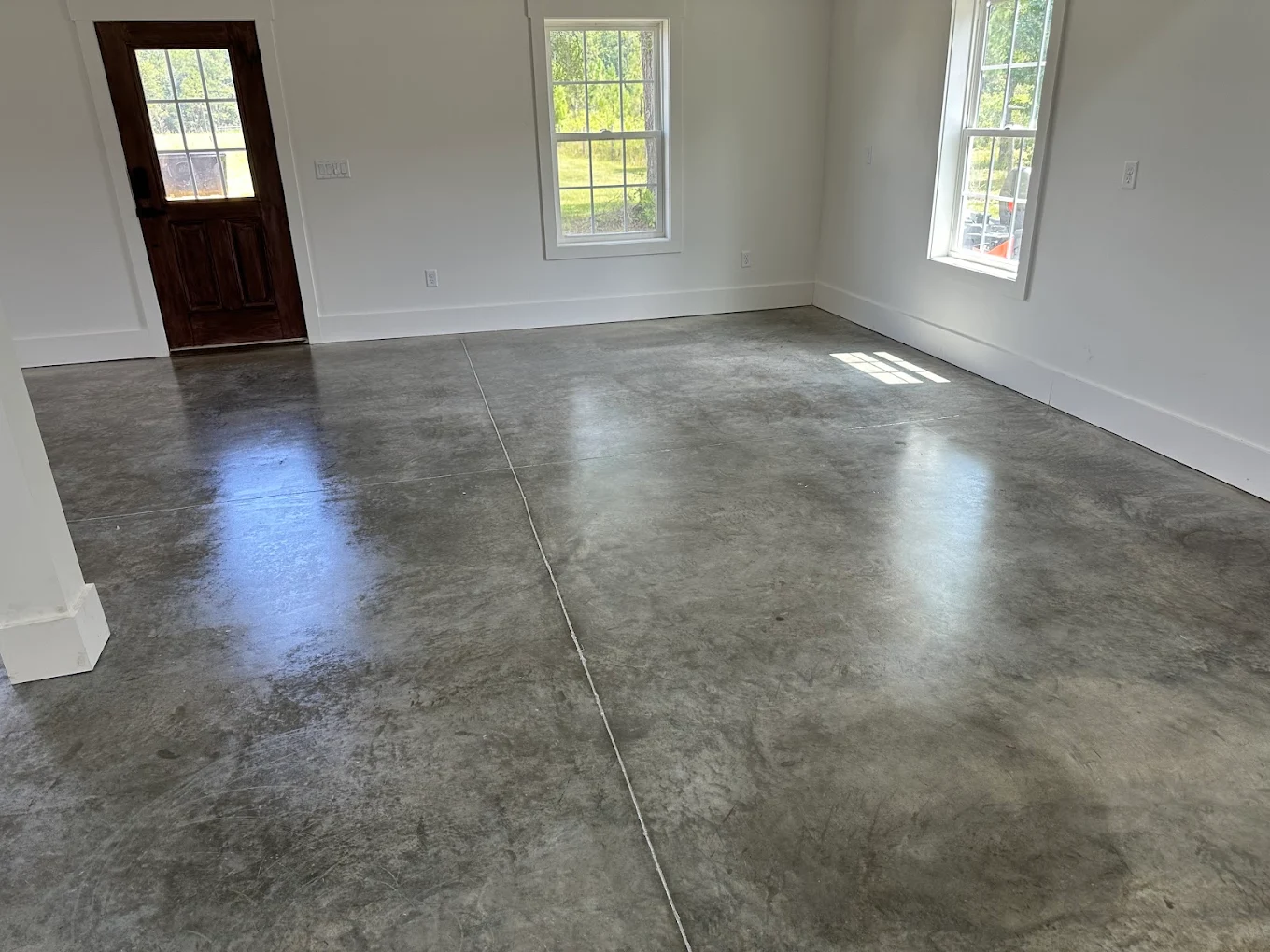
Age, wear, sunlight and product availability affect how closely a repaired section can match. Decorative flake can help blend some transitions, while solid or metallic finishes may show a repair more clearly. JW explains those visual tradeoffs before the project is approved.
A five-step working plan
The sequence changes when the surface, product or repair requires it, but these are the decisions every estimate should make visible.
Discuss when and where the coating changed or failed.
Assess the accessible finish around the visibly damaged area.
Agree on local repair, wider recoat or removal scope.
Remove unsound material and apply the approved repair system.
Protect the repaired area until the specified products allow use.
Questions before an estimate
These answers are planning guidance, not a diagnosis of a surface that has not been inspected.
Loose or failing material should not simply be buried. The soundness and compatibility of the remaining finish must be considered first.
Not necessarily. Existing wear, color variation and product changes can leave a visible transition. JW will discuss the expected appearance before work.
Several conditions can contribute, including trapped air, contamination, moisture or application factors. The visible symptom alone may not prove one cause.
Broad loss of adhesion, incompatible layers or repeated repairs can make a larger reset more sensible. The recommendation depends on the inspected floor.
Start the conversation
Share the property ZIP, current material, visible condition, approximate area and the finish you are considering.